
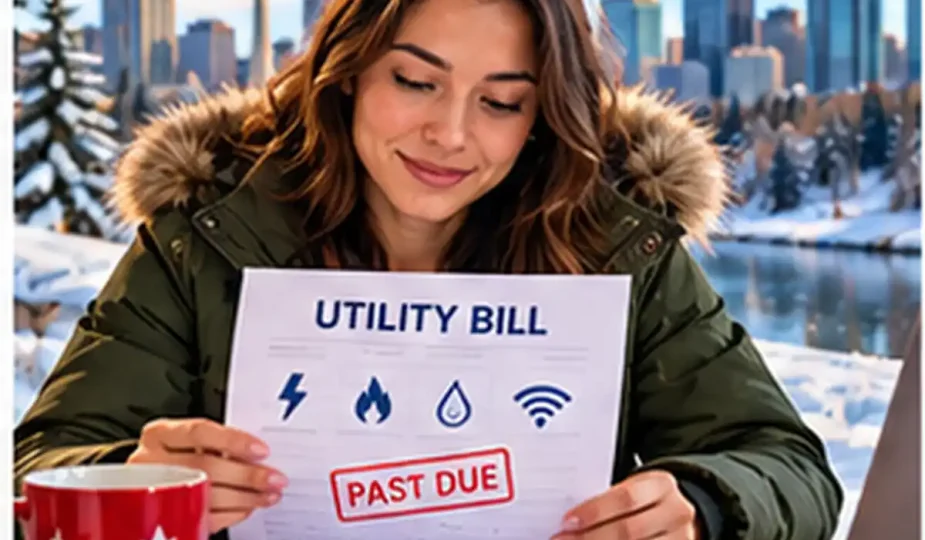
 Utility bills are an unavoidable part of maintaining a Canadian household. Electricity, natural gas, water, and heating costs can fluctuate significantly depending on the season, household size, and energy consumption. When an unexpectedly high bill creates financial pressure, some consumers begin researching online loans for utility bills in Alberta to understand whether short-term financing could help. Before borrowing, households should investigate payment arrangements, assistance programs, and the total cost of any financing agreement.
Why Utility Bills Can Become Unexpectedly Expensive
Canadian households experience considerable seasonal changes in energy consumption.
During winter, heating systems may operate continuously to maintain comfortable indoor temperatures.
Extremely cold weather can increase natural gas or electricity consumption, depending on the home’s heating system.
In summer, air conditioning may contribute to higher electricity costs.
Other factors, such as poorly insulated windows, aging appliances, or malfunctioning equipment, can also increase energy consumption.
These expenses may be particularly difficult for households operating with limited monthly savings.
Understanding Your Utility Statement
Before deciding how to cover a high bill, review the statement carefully.
Check the billing period, previous balance, consumption measurements, and any additional charges.
Sometimes a bill is unusually high because it covers a longer period than expected.
An estimated meter reading may also differ from actual usage, depending on the utility provider’s procedures.
If the amount appears incorrect, contact the utility company to request clarification.
Identifying billing errors or unexpected charges could reduce the amount owed without requiring financing.
Asking About Payment Arrangements
Many utility providers have procedures for customers experiencing financial difficulties.
Depending on the company and circumstances, customers may be able to request an extension or structured payment arrangement.
Some providers offer equal-payment plans that spread estimated annual energy costs more evenly across the year.
These arrangements can make budgeting easier when seasonal consumption varies.
Contacting the provider before a payment becomes overdue may create more opportunities to discuss available options.
However, the availability and conditions of payment arrangements differ between companies.
Investigating Energy Assistance Programs
Low-income households and consumers experiencing financial emergencies may qualify for certain community or government assistance programs.
Some programs help eligible residents manage essential energy expenses.
Others provide support for home insulation, energy efficiency improvements, or necessary heating equipment.
Eligibility requirements depend on the program and jurisdiction.
Local community organizations may be able to direct residents toward relevant services.
Exploring assistance options can be especially valuable before accepting expensive short-term borrowing.
Understanding the Cost of a Loan
If financing is being considered, the total repayment amount should be calculated in advance.
Different borrowing products have different interest rates, fees, and repayment periods.
Payday loans generally have high costs relative to their short terms.
For example, at a borrowing fee of $14 per $100, a $400 payday loan would involve a $56 fee and a scheduled repayment of $456.
The borrower would still need to pay upcoming utility bills and other essential expenses.
If the repayment would create another financial shortfall, the financing may be unsuitable.
Reducing Future Energy Expenses
Households can take practical steps to improve energy efficiency.
Checking door and window seals, adjusting thermostats, maintaining heating equipment, and using efficient lighting may reduce energy consumption.
Replacing older appliances with efficient alternatives can sometimes produce savings, although purchasing new equipment involves upfront costs.
Renters may need landlord approval for certain improvements.
Small adjustments, combined with regular monitoring of utility usage, can help identify opportunities to control expenses.
Creating a Utility Savings Reserve
Utility costs are often predictable over a full year even when individual monthly bills vary.
Review previous statements to estimate annual spending.
A household can then establish a monthly savings target that accounts for seasonal increases.
Setting aside additional money during lower-consumption months may reduce pressure when winter bills arrive.
Making Sustainable Financial Choices
An unexpectedly high utility bill can create understandable concern, particularly during harsh Canadian winters.
However, borrowing should be considered only after reviewing the bill, contacting the provider, and investigating available assistance.
If financing is necessary, comparing total costs and ensuring repayment affordability are essential.
A combination of budgeting, energy efficiency, and early communication can help Canadian households maintain reliable utility services while reducing their dependence on short-term credit.