 A missing key after a move, a damaged deadbolt, or a break-in can turn an ordinary evening into a security problem. The first instinct is often to hire the first person who answers the phone, but urgent service can become unusually expensive when the price is unclear. Homeowners and renters looking at guidance for reviewing short-term borrowing costs should first work out which lock service is necessary, what it will cost, and whether a landlord or insurance policy has a role in paying. A secure door matters; a rushed financial decision should not be part of the damage.
Confirm the immediate risk
Not every lost key requires replacing every lock in the home. If a key was misplaced in a location unrelated to your address, the risk might differ from a bag stolen with identification showing where you live. A broken latch, however, may leave an entrance unable to close safely. Determine whether someone can remain inside, whether a temporary secure entrance is available, and which doors need professional attention tonight. Where there has been a break-in, follow appropriate safety and police-reporting procedures before disturbing possible evidence. Avoid forcing a damaged lock or leaving a door secured with improvised hardware that could fail in an emergency.
Ask for a precise estimate before dispatch
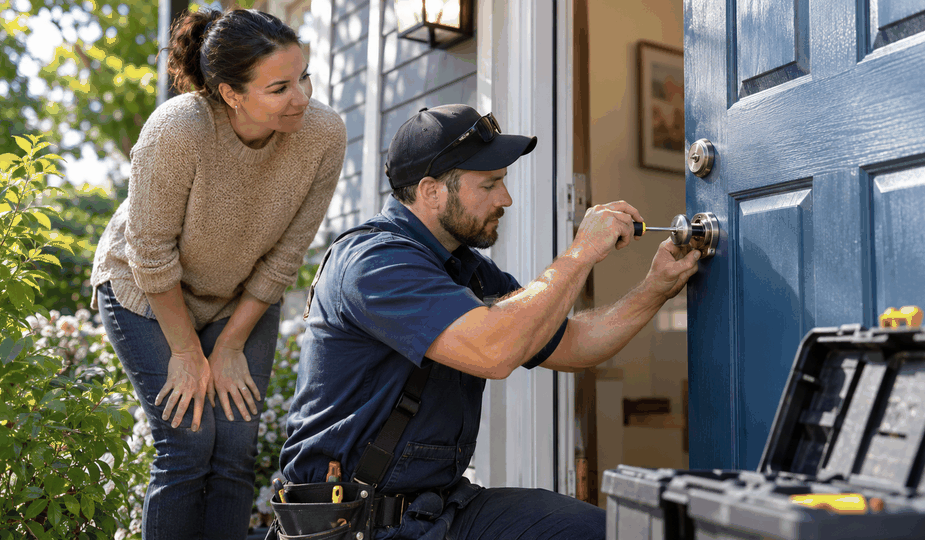
Describe the door type, whether it opens, the number of locks, and whether the key is lost, broken, or possibly stolen. Ask the locksmith to explain the call-out fee, after-hours surcharge, labour rate, replacement hardware, taxes, and any minimum service charge. Request a written or texted estimate and ask what circumstances could change the price once the technician arrives. A suspiciously low telephone quote that becomes a much larger amount at the door is a warning sign. Check local reviews, the business address, and how the company identifies its technicians. Never agree to unnecessary drilling or full replacement without understanding why a simpler service will not work.
Compare rekeying with replacement
Rekeying changes the internal pins or mechanism so previous keys no longer operate the lock, while replacement installs different hardware. Rekeying may be appropriate when the door and lock are sound but key control is the concern. Replacement may be needed for a damaged mechanism or a lock that no longer meets the household’s security needs. Ask whether the chosen hardware fits the existing door without extra carpentry. Smart locks can add features, but they may also require batteries, compatible phones, and an installation cost that exceeds a conventional deadbolt. Paying for an upgrade during an emergency is not always the best use of limited funds.
Determine who should pay
Renters should review their tenancy agreement and contact the property manager before authorizing expensive work where it is safe to do so. Responsibility can depend on the reason for the repair and local rules, so neither tenant nor landlord should assume the answer without checking. Homeowners may want to review applicable insurance coverage, including deductible amounts and claim conditions, particularly after theft or forced entry. A claim is not automatically the cheapest option for a relatively modest expense. Keep photographs of damage, detailed receipts, and the locksmith’s description of the work. They may be useful for insurance, property-management discussions, or a later warranty request.
Borrow only for a defined shortfall
If available cash cannot cover essential lock work, calculate the shortfall after considering emergency savings and any approved reimbursement. A loan should be assessed by its total repayment amount, fees, dates, and consequences if an instalment is missed. An advertised small payment can conceal a larger overall cost when the term stretches out. Check how the withdrawal date lines up with rent, groceries, transportation, and existing commitments. Repeated borrowing to cover routine household repairs is a signal that a broader budget change may be necessary. Borrowing more than the documented repair invoice merely because it is offered adds avoidable expense.
Prevent the next lock-related emergency
Store a spare key in a secure arrangement rather than in an obvious hiding place near the door. Document the type of lock, warranty, and the name of a trusted service provider before an emergency occurs. After changing keys, update household members and anyone who legitimately needs access without circulating copies casually. If keys were stolen, also review garage remotes, access fobs, and other entry devices associated with the missing items. The right outcome is not the most elaborate security package; it is a door that works, a clearly documented bill, and a repayment plan—if one is required—that remains manageable after the technician leaves.
Keep the invoice simple to audit
Before paying, compare the final invoice with the quoted services. Verify how many cylinders were serviced, whether replacement parts were installed, and what warranty applies to labour and hardware. If charges differ significantly, ask for an itemized explanation before authorizing payment. Keeping a short written record of the call, arrival time, and work completed provides clarity if questions arise later. A little documentation can help a homeowner resolve a security issue without also inheriting a billing dispute.